
The Number That Has Not Changed
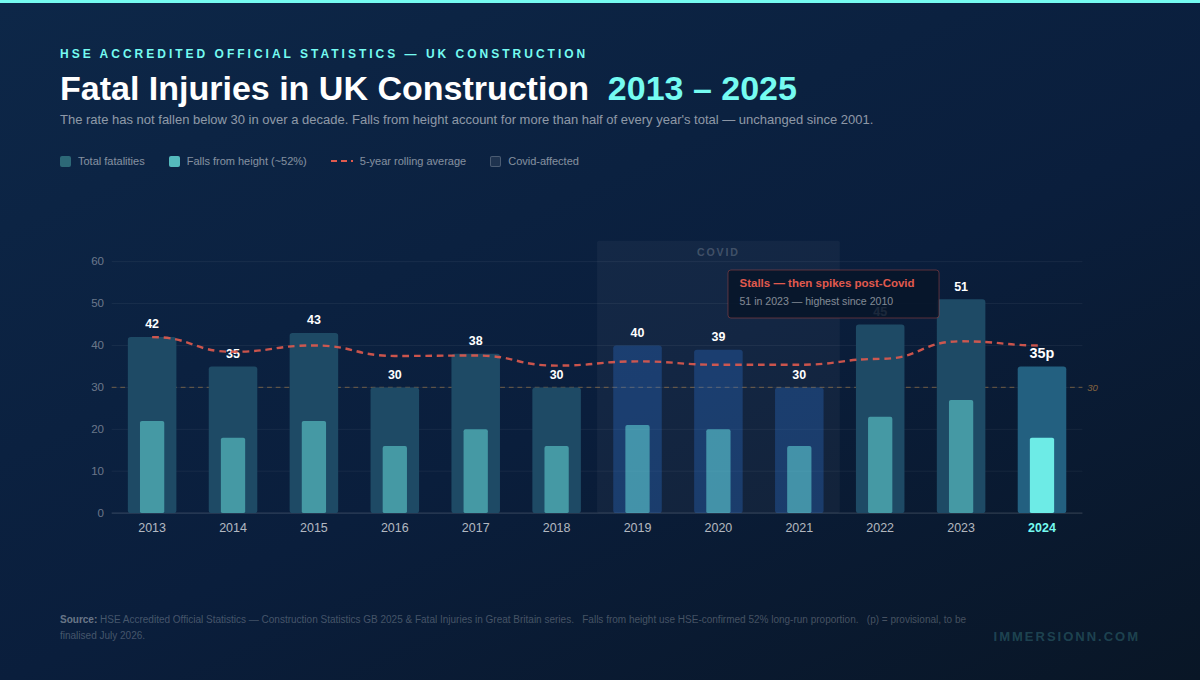
Every year, on average, 21 construction workers in the UK fall to their deaths on site.
That figure has barely changed in 12 years.
Not for lack of trying. The industry has invested in harness systems, edge protection, permit-to-work frameworks, toolbox talks, and mandatory training programmes. The HSE has tightened regulations. Firms have hired safety managers, run campaigns, and built entire departments around compliance. And yet falls from height remain the single leading cause of construction fatalities, accounting for more than half of all site deaths every year since 2013.
The equipment got better. The rules got stricter. The number stayed roughly the same. That should prompt a serious question: if two decades of conventional safety training and compliance frameworks have not shifted that figure, what will?
The Problem is Not Awareness. It is Behaviour Under Pressure.
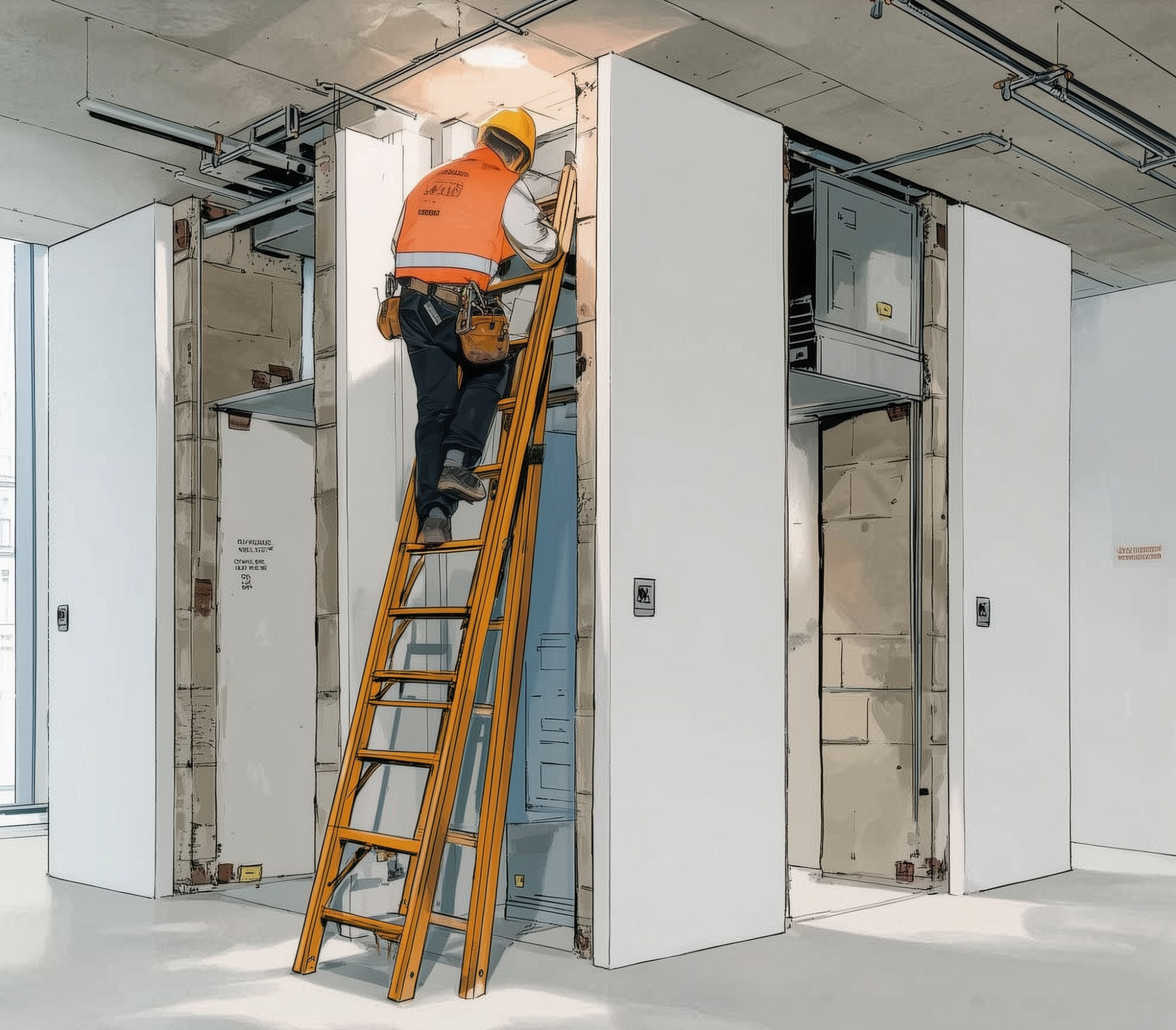
Most construction workers who fall from height knew the risk. They had attended the training. They had signed the forms. In many cases, they had the right equipment within reach.
What failed was not knowledge. It was the gap between knowing something in a classroom and acting on it instinctively at six metres, under time pressure, with three other tasks competing for attention.
This is not a paperwork problem. It is a human performance problem. And human performance is shaped by experience, by repetition, by the kind of embodied muscle memory that comes from doing something, not from being told about it.
Conventional safety training, however well designed, operates at the level of information transfer. It tells workers what the hazards are. It explains the procedures. It tests recall. What it cannot do is replicate the physical and cognitive conditions of the moment when a decision actually has to be made.
That gap has remained stubbornly open for two decades. And it is precisely the gap that immersive technology was built to close.
Where AI Fits, and Where It Does Not
AI is transforming construction safety. Just not in the way most people think.
Artificial intelligence is genuinely useful in this space. Computer vision systems can monitor sites in real time, flagging workers without PPE, identifying proximity hazards near plant machinery, and generating compliance reports without a safety manager having to walk the floor. Predictive analytics can surface patterns across incident data that no human reviewer would catch. AI-assisted risk assessments can be produced in minutes rather than days.
These are real capabilities, and the industry is right to adopt them. But they are all, fundamentally, systems of observation and analysis. They operate on the environment, the data, the documentation. What they cannot reach is the moment a worker decides, consciously or not, to skip a step at six metres because the job is running late.
Changing that decision requires something that happens inside the person: built instinct, rehearsed response, the kind of spatial awareness that only develops through experience. No dashboard produces that. No AI-generated risk briefing, however well written, bridges the gap between reading about a hazard and recognising it under pressure on an unfamiliar structure.
Large language models can generate safety content at genuine scale and speed, and that has real operational value for documentation, inductions, and compliance workflows. But generated content is still content. It still asks the worker to absorb information in one context and transfer it to a completely different physical one. That transfer problem is exactly what conventional training has failed to solve for twenty years.
This is not a criticism of AI. It is a description of what AI is designed to do, and an honest look at where that design ends.
Where XR Fits, and What It Uniquely Does
Immersive training works differently. It brings the worker on stage.
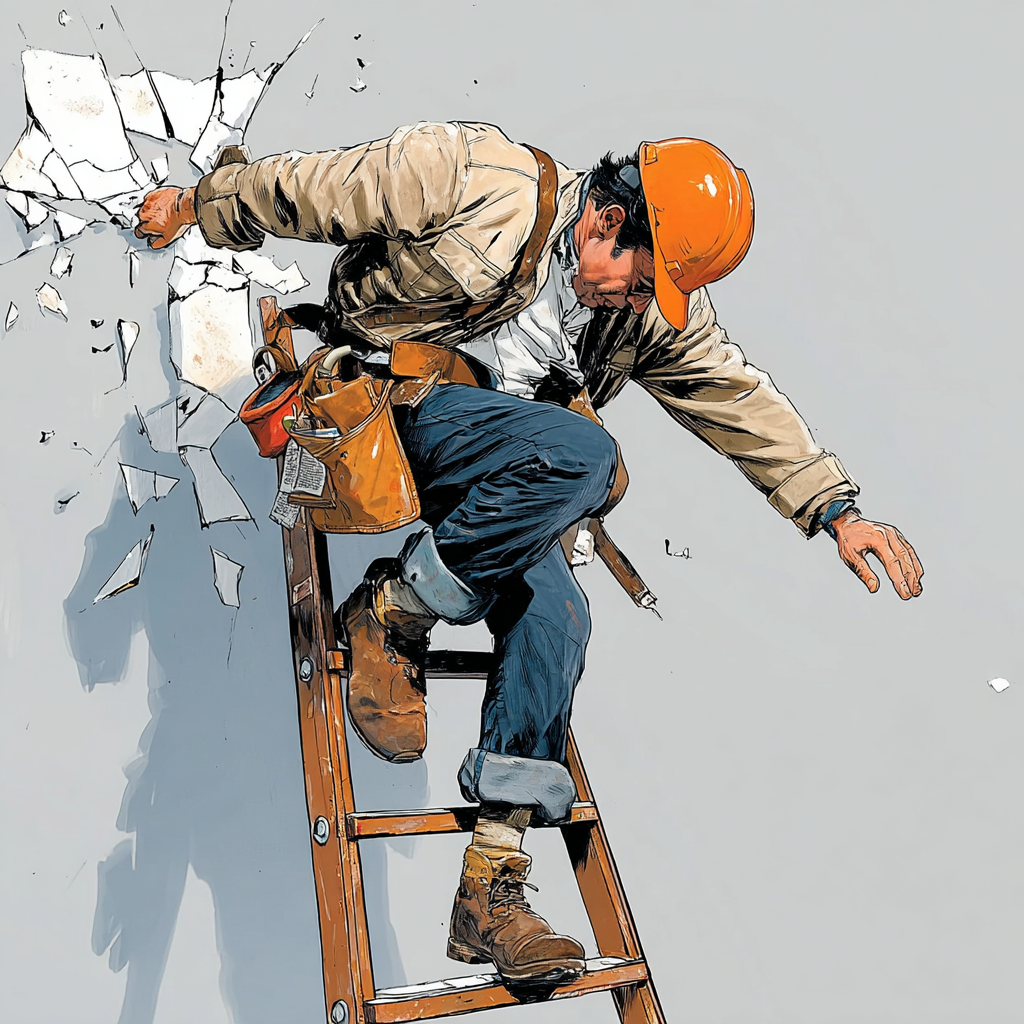
Extended reality (XR) places a worker inside a scenario before they ever set foot on a live site. Not a video of a scenario. Not a description of one. The actual cognitive and physical experience of standing at height, identifying an unguarded edge, deciding how to approach a task safely, with the spatial pressure and visual context that a classroom whiteboard simply cannot replicate.
That distinction matters more than it might sound.
Hazard recognition, the ability to read a site and instinctively register what could kill you, is not a knowledge skill. It is a perceptual skill. It develops through exposure, repetition, and consequence. Traditionally, that exposure only came through years on site, which meant junior and less experienced workers carried the highest risk during exactly the period when they were most vulnerable.
XR compresses that exposure. A worker can encounter a fall hazard scenario, make a mistake, understand the consequence, and repeat the sequence in a controlled environment before the risk is real. A peer-reviewed meta-analysis published in the Journal of Safety Research confirmed that the XR-trained construction workers showed 78% stronger hazard recognition compared to those trained through conventional methods, the largest recorded across all measured outcomes.
The Bouygues Batiment deployment, 1,724 training sessions delivered across 450 sites in a single week (on screen, mobile as well as VR headsets), including multilingual capability and fully offline operation, demonstrates that this is not a lab result. It is an operational reality, at scale, in one of Europe’s largest construction groups.
Falls from height account for more than half of UK construction fatalities because the hazard is spatial, contextual, and dependent on human judgement at the moment. XR is the only training medium that addresses all three of those dimensions directly.
The Convergence: Where XR and AI Meet
The real opportunity is not XR versus AI. It is what happens when they work together.
The framing of this article has been deliberate. XR and AI are not competing for the same problem. They are solving different parts of it, and the construction industry needs both.
AI excels at the systemic layer: monitoring environments, processing incident data, identifying risk patterns across large workforces, and automating the compliance documentation that currently consumes significant safety management time. These are genuine efficiency gains, and they free up the human capacity that should be focused on culture, coaching, and intervention.
XR operates at the human layer: building the perceptual skills, spatial awareness, and instinctive responses that determine how a worker actually behaves when the conditions are right for an accident. It addresses the problem that no amount of data analysis can reach.
Where the technologies begin to converge is in the Digital Twin. A live, intelligent model of a building, fed by IoT sensors, site data, and AI-processed incident history, becomes the environment inside which XR training scenarios are built. Workers train in a virtual replica of their actual site, encountering the specific configurations, access points, and hazards that exist in the real project they are about to work on. The training stops being generic. It becomes contextual.
This is where techUK’s Digital Twins 2035 programme points. The vision articulated by contributors from the Department for Transport, Arup, and InterSystem is one where physical assets and their digital counterparts are inseparable, where simulation, prediction, and real-time optimisation become standard operational practice across industry.
For construction safety, that convergence has a very specific application: workers who have already navigated a digital version of the site they are about to enter, in conditions that replicate the spatial and cognitive demands of the real environment, before a single scaffold board goes up.
Twenty-one deaths per year from falls from height is not an acceptable baseline. The tools to change it exist. The question is whether the industry moves quickly enough to deploy them.
The Industry Has the Data. It Has the Regulation. What It Needs Now is a Different Kind of Training.
Construction has never been short of safety ambition. The volume of guidance, legislation, and investment directed at the problem over the past two decades is substantial. What that investment has not produced is a sustained reduction in the number of people who fall.
The reason, as this article has argued, is that the dominant model of safety training addresses the wrong layer. It informs. It documents. It ticks boxes. What it does not do is build the embodied, instinctive competence that keeps a worker safe at height when attention is divided and time is short.
That is a solvable problem. The evidence base exists. The technology is deployable today, not in a research lab, but across large, distributed workforces in complex multilingual environments.
Immersionn works with construction firms to implement immersive XR safety training that is grounded in this evidence, built around your workforce, and designed to integrate with the digital infrastructure you are already building. If you are responsible for safety outcomes on UK construction sites, we would welcome the conversation.
References
[1] Health and Safety Executive. Construction Statistics in Great Britain, 2025. HSE Accredited Official Statistics. hse.gov.uk/statistics/assets/docs/construction.pdf
[2] Zhang et al. (2023). “Are virtual reality applications effective for construction safety training and education? A systematic review and meta-analysis.” Journal of Safety Research. DOI: 10.1016/j.jsr.2023.09.025
[3] Frontiers in Built Environment (2024). “Revolutionizing construction safety: introducing a cutting-edge virtual reality interactive system.” DOI: 10.3389/fbuil.2024.1320175
[4] HSE Media Centre, July 2025. Annual fatality statistics 2024/25. press.hse.gov.uk
[5] techUK Digital Twins 2035 programme. techuk.org/what-we-deliver/events/digital-twins-2035.html